I recently traveled through Austria for personal reasons. Specifically, I was in the Krems area, in the Wachau (Lower Austria); an idyllic town on the banks of the Danube, just an hour west of Vienna. It is an absolutely beautiful place that makes you understand why it inspired some of the most beautiful classical compositions in history.
But, honestly, this post is not about the landscape.
My intention this year was to spend a Christmas of total disconnection. I wanted to take a break from work to reconnect with my family and, I confess, to get away from that information and AI saturation in which I live professionally immersed. As much as I love technology, this year has been so intense that a break from screens was more than necessary.
However, fate had other plans for my “disconnection,” and those plans have a first and last name: Christian Frenslich.
Mechanics in a Space Without Pixels
Christian is an old friend of my partner whom I have known for more than 15 years. He is a mechanical engineer with an extensive and very diverse career in the world of high-competition racing. His experience ranges from major international top-level events to having worked directly for two seasons traveling the globe with the Formula 1 world championship. So far, it might all seem like the logical resume for a professional of his caliber.
The peculiarity arises when you discover that Christian has decided to anchor himself, by conviction and love for the purity of technique, in the analog world.
He doesn’t have WhatsApp. He doesn’t have a smartphone. He still watches TV on a tube (CRT) set. It is fascinating—and strangely comforting—to be with him and hear the original ringtone of his Nokia 1112. While the rest of the world rushes toward a digital transformation that is sometimes hollow, he maintains a pace of life where the tangible and the mechanical remain the protagonists.
While in Krems, he invited me to see a project he has poured his life into for the last few years. So we set off for Nöhagen, a small town about 18 km from Krems. I expected to see a conventional car workshop. I was completely wrong.
Analog Engineering and Architecture
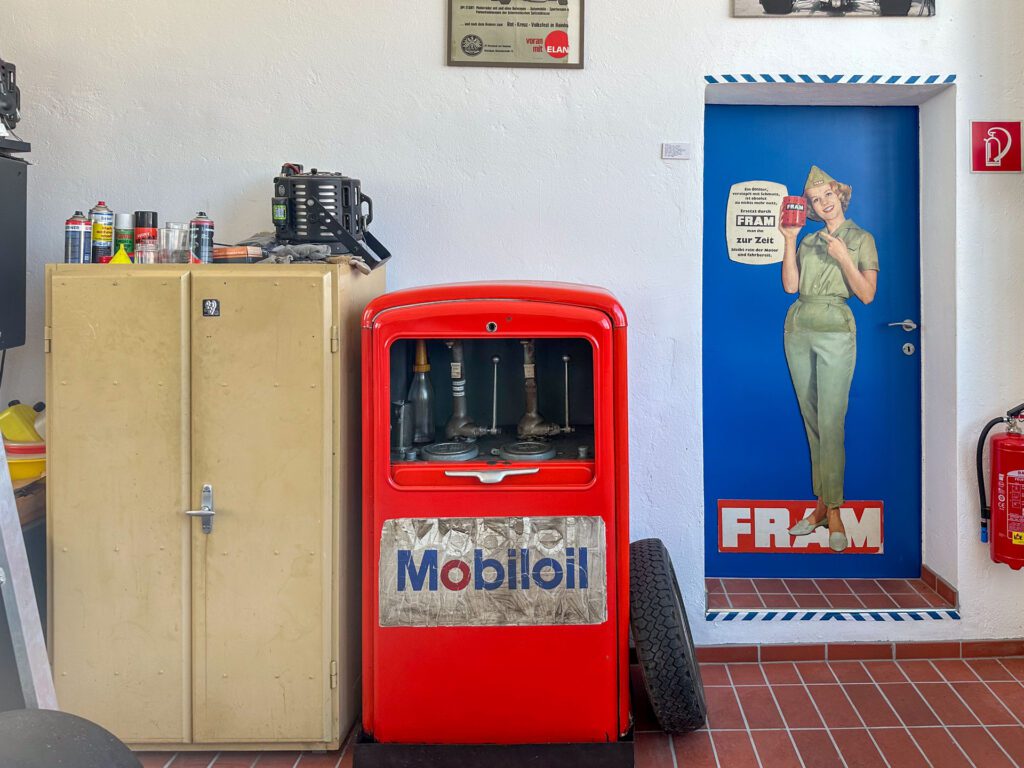
Upon arrival, the exterior facade already warns you that something has changed. Engine plates from the 80s welcome you to what seems like a trip back in time 30 or 40 years. But the real “spell” happens when you cross the door.
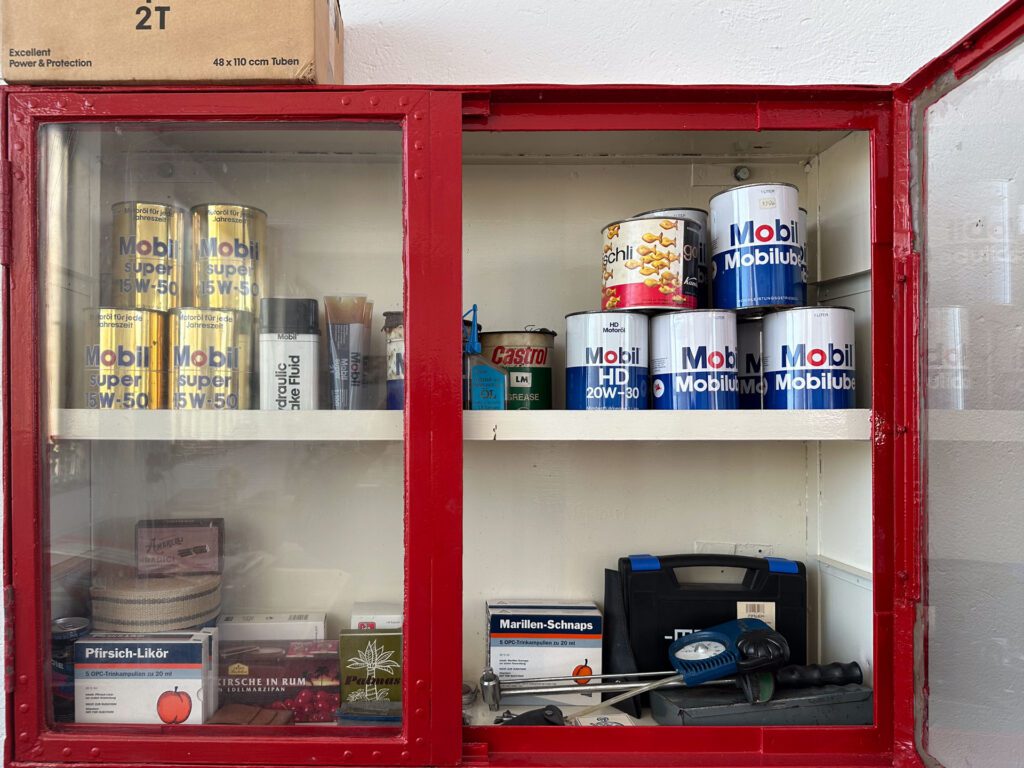
Christian has renovated an old building to create a hybrid between a workshop, a museum, and a hostel. He has literally sacrificed all his money, time, and effort over the last four years to bring this dream to life, and seeing the result today is something truly admirable.
The space is divided into several rooms that are a feast for any engineering lover:
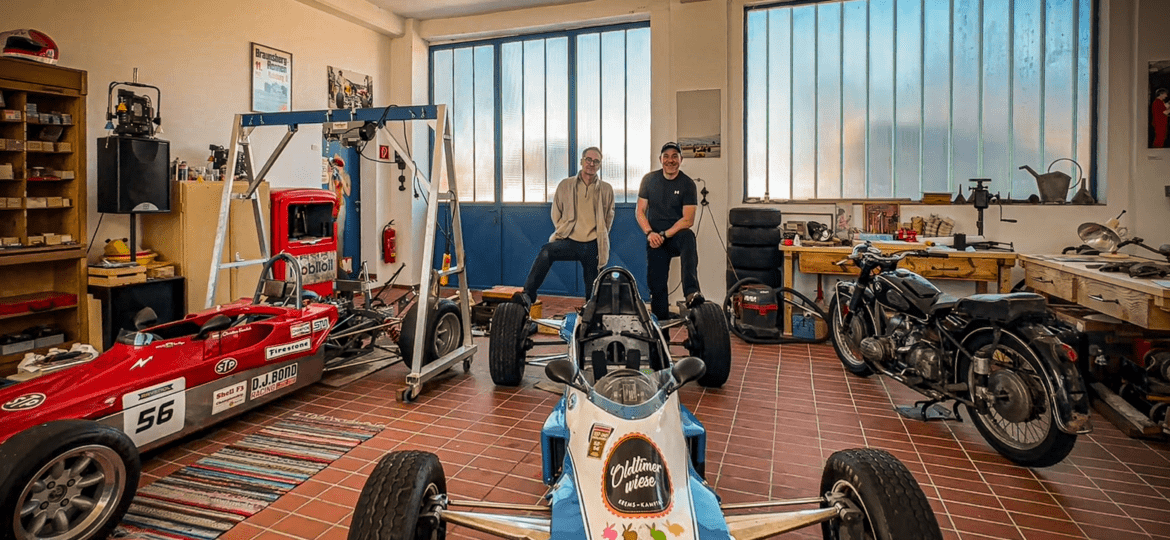
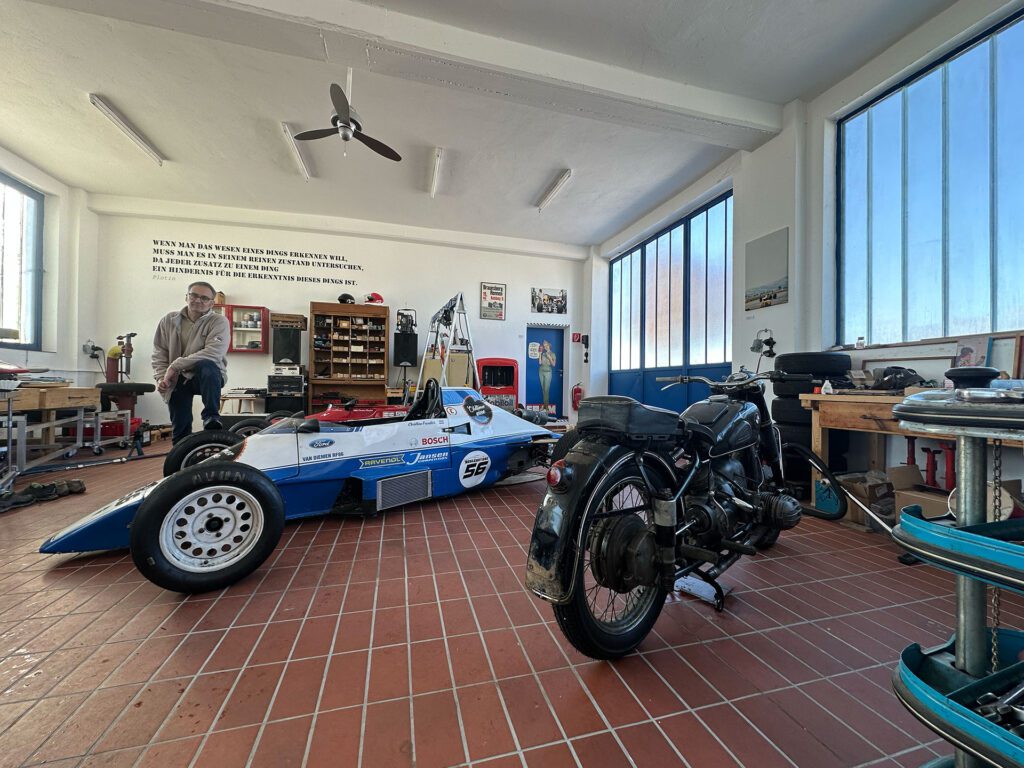
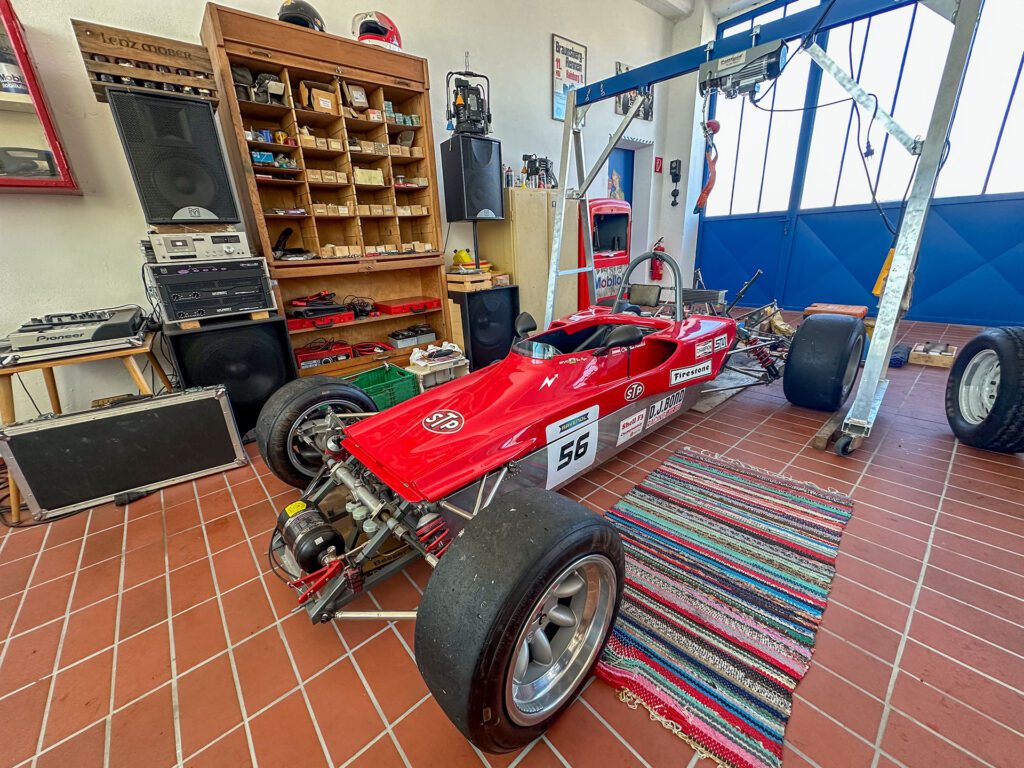
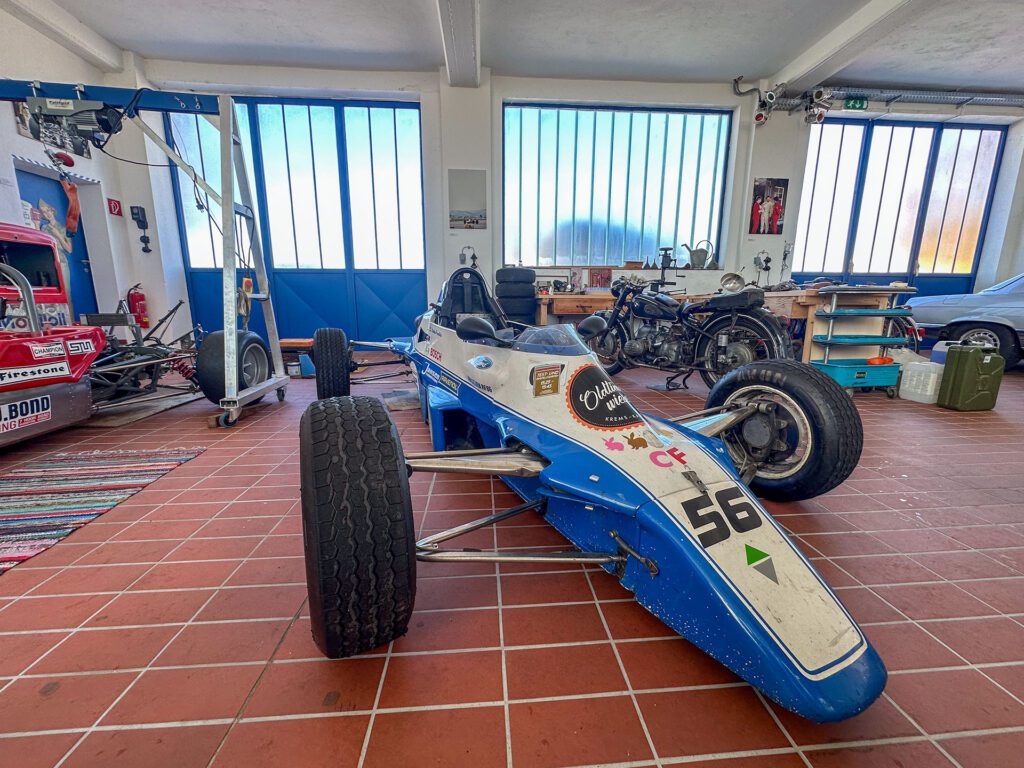
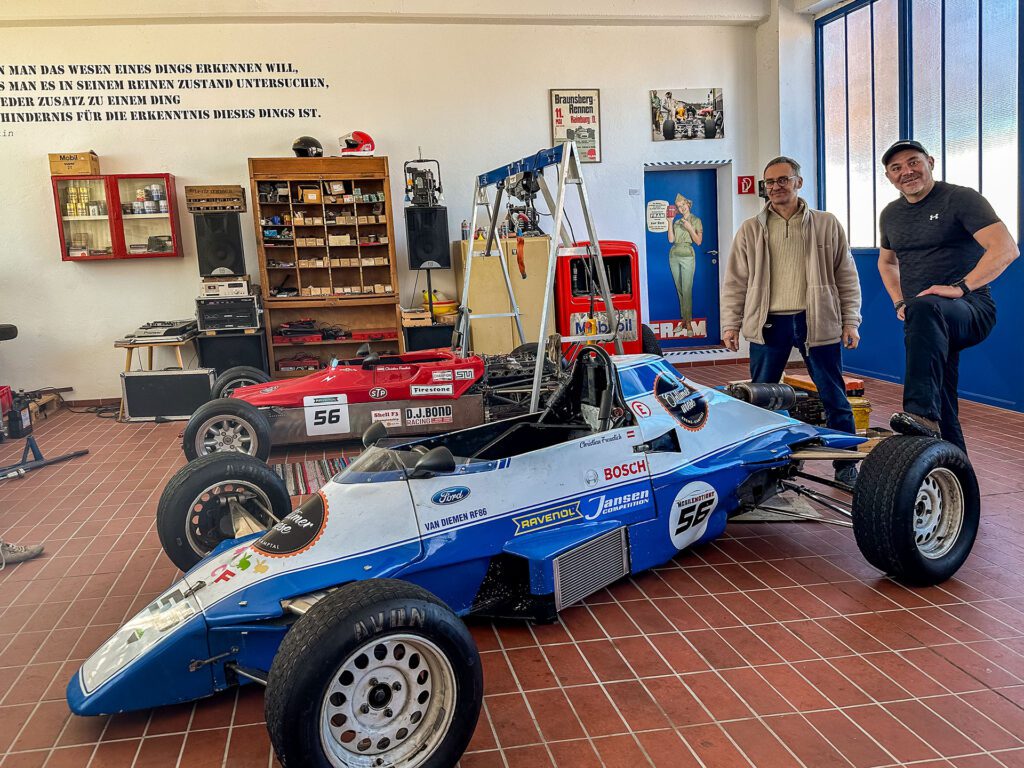
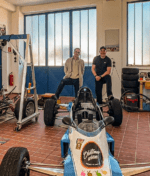
Room 1: Active racing gems, such as the Royale RP11 Formula 3 (1971) and the Van Diemen RF86 Formula Ford (1986), alongside a spectacular, recently restored 1954 BMW R51/3.
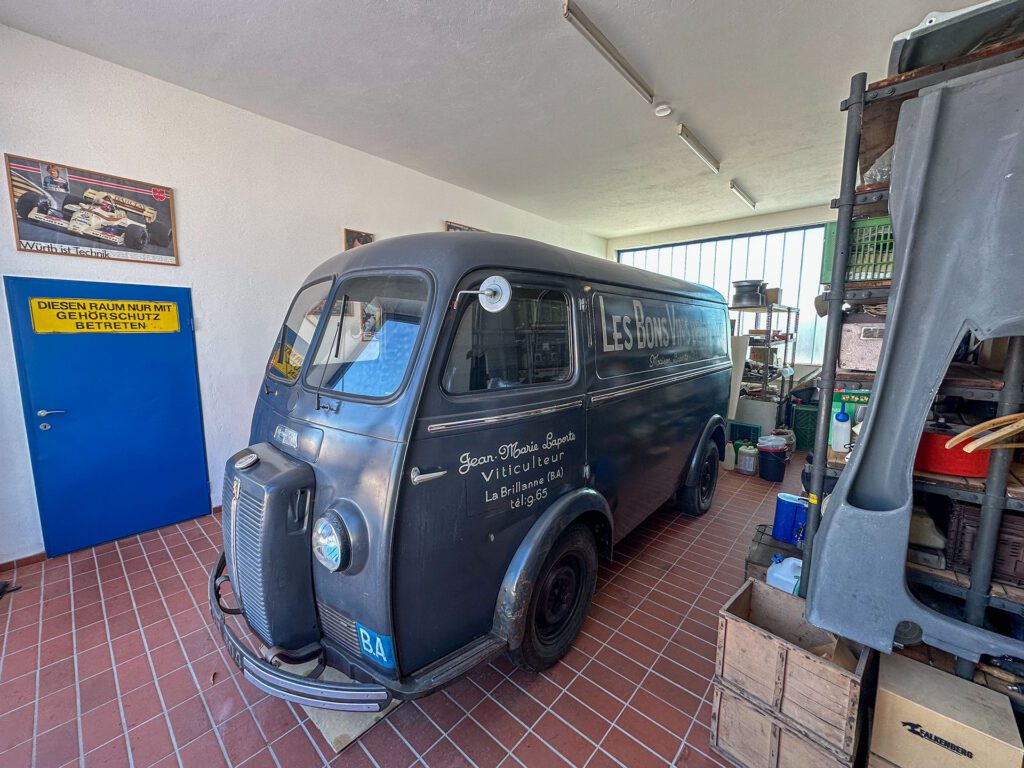
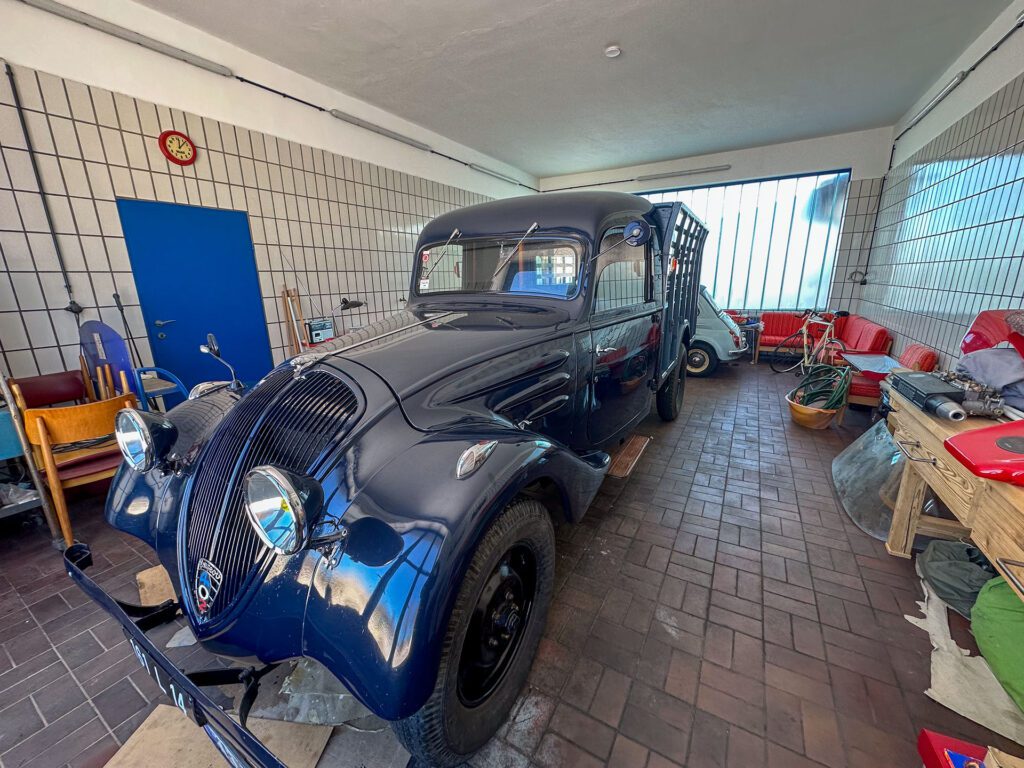
Rooms 2 and 3: Here, history becomes tangible with a Peugeot D3A (1955) and a 1937 Peugeot MK4, a machine that survived the bombings of Normandy in World War II. We also find the legendary Puch 500 D (1959).
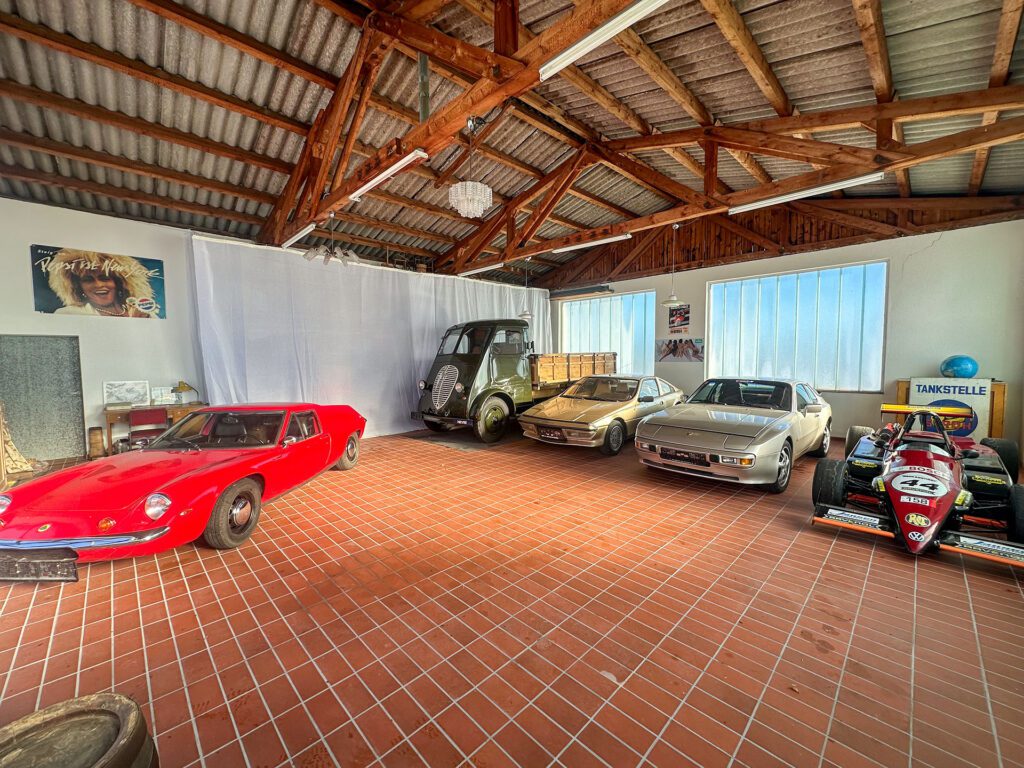
Room 4: An exquisite collection that includes a Lotus Europa S2 (1970) and a Porsche 944 S (1989).
Each of these pieces has been restored by Christian down to the smallest detail. He told me how he doesn’t just look for parts online, but travels throughout Europe visiting local flea markets, rescuing what others consider junk to bring a perfect engine back to life.
A Time Capsule
But what really blew my mind wasn’t just the cars. Christian has transformed part of the building into a small hostelwhere each room is an extension of his philosophy. You don’t just come here to sleep; you come to inhabit a different era.
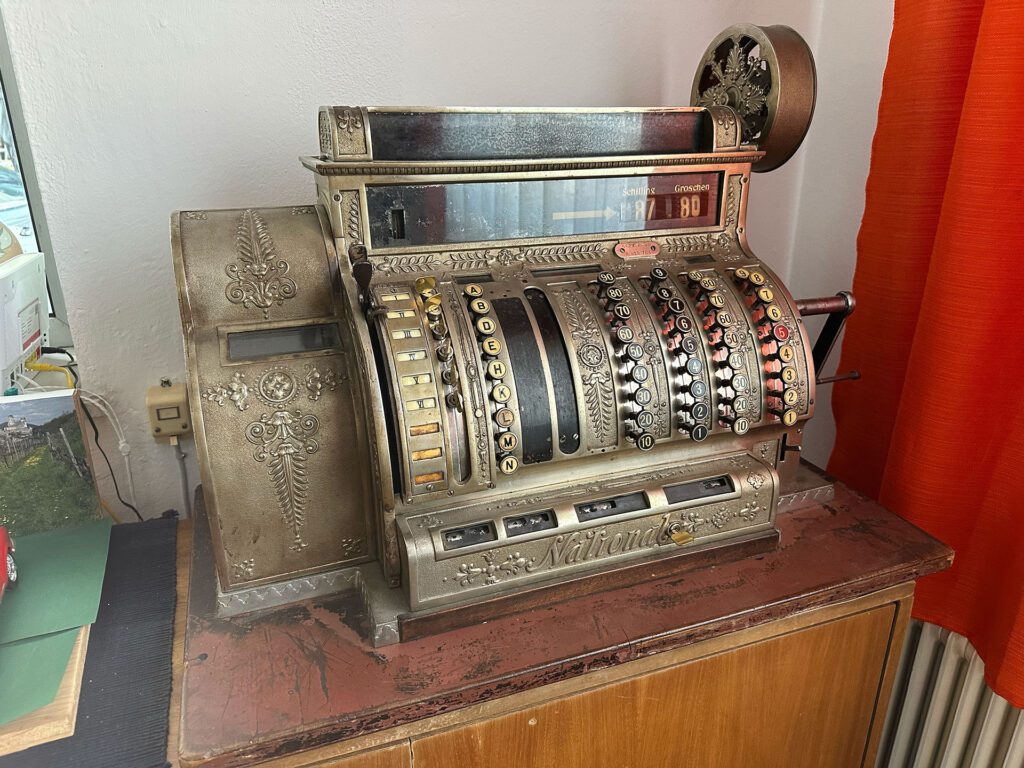
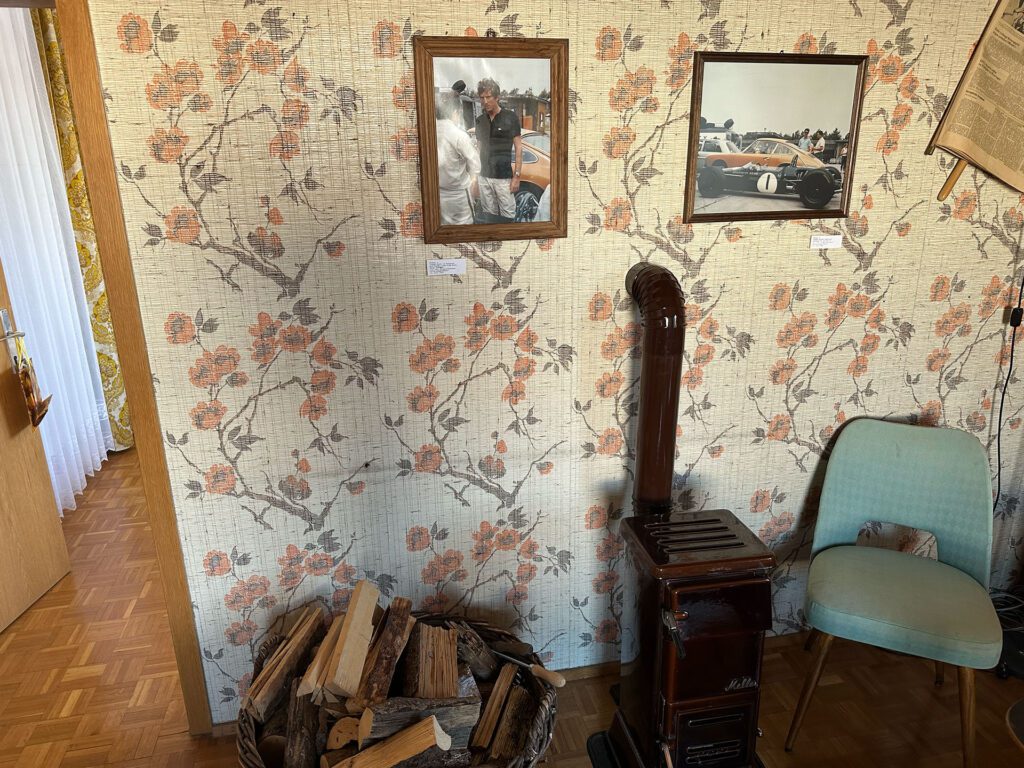
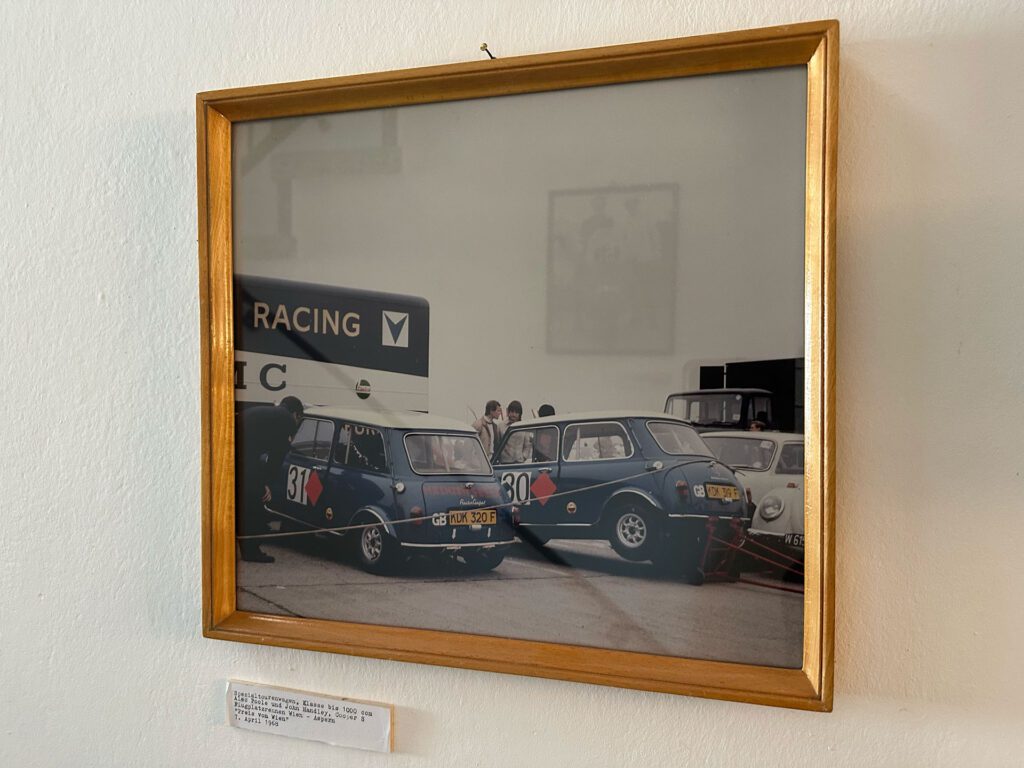
Each room is a time capsule: analog radios that still work, recovered heaters from the 50s, and walls decorated with original Formula 1 photographs captured by his father. Even the information texts for guests are written on an original 60s typewriter, with that metallic keystroke that today sounds like an echo from the past.
Every corner of the accommodation tells a story. I stood hypnotized looking at a hand lamp made in 1980 with the original “Made in Hong Kong” label. It is a space that forces you to downshift, to put your phone aside, and to reconnect with the materiality of things.
If you love the motor world, you have to visit
As many of you know, I was professionally linked to the motor world for many years when I worked for Honda Motorcycles (2008-2016). It had been a long time since I saw such an authentic and personal project.
If you are passionate about engines, well-done restorations, or simply feel nostalgia for the analog world, stop by if you are ever in Austria. It is well worth meeting him and seeing what he has built in Weinzierl am Walde.
You can take a look at his website for photos and technical details of his work: oldtimerwiese.at
For now, communicating with him requires patience and traditional means, but let’s hope you can reach him via WhatsApp very soon!